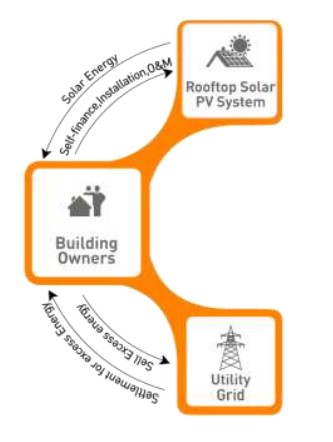
This is the most common business model for solar deployment in India, where the consumer purchases the solar system by making 100% of the payment upfront or financing the system, often through a bank.
When it comes to solar energy solutions for businesses, the CAPEX (Capital Expenditure) Model and OPEX (Operating Expenditure) Model are two primary business models used to finance and manage solar installations. Each model has distinct financial structures, investment strategies, and risk profiles. Here’s an overview of both:
The CAPEX Model involves businesses directly purchasing and owning the solar system, making a large capital investment upfront. This is the traditional approach and involves full responsibility for installation, maintenance, and the long-term operation of the system.
Key Features of the CAPEX Model:
Upfront Capital Investment: The business pays for the system upfront, covering all costs related to the solar panels, inverters, installation, and other necessary infrastructure.
Full Ownership: The business owns the solar system and all the energy produced. Any energy savings and associated Renewable Energy Credits (RECs) belong to the business.
Energy Savings: The business enjoys lower energy bills once the system is up and running, often leading to a significant reduction in utility costs. Over time, these savings can offset the initial investment.
Incentives: Businesses can take advantage of government incentives, such as tax credits (e.g., Investment Tax Credit in the U.S.) and rebates, which reduce the overall cost of the system.
Maintenance: The business is responsible for maintaining the system, ensuring optimal performance, and paying for any necessary repairs or upgrades.
OPEX MODEL
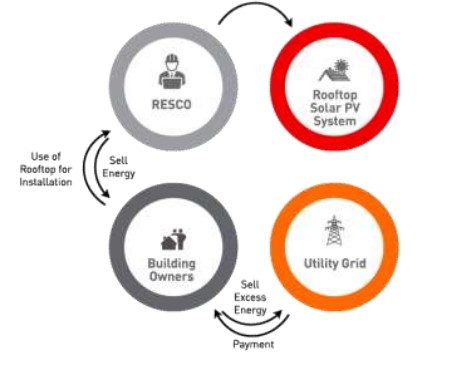
In this model, the RESCO developer invests in the solar rooftop asset and sells the generated power to the building owner at a lower solar power tariff, with the excess power potentially sold to the utility through a net metering system.
The OPEX Model involves businesses adopting solar energy without the large upfront costs of purchasing a system. Instead, businesses pay for the solar power they use through agreements such as Power Purchase Agreements (PPAs) or Solar Leases, turning the expense into an operating cost rather than a capital expenditure.
Key Features of the OPEX Model:
No Upfront Capital Investment: Businesses do not need to purchase the solar system outright. Instead, they enter into a contract (typically a PPA or Solar Lease) with a third-party solar developer or provider.
Monthly Payment Structure: The business pays a fixed monthly fee (in a lease) or a per-kWh rate (in a PPA) for the energy produced by the solar system, often at a lower rate than the business’s current utility prices.
Third-Party Ownership: The third-party provider installs, owns, and maintains the solar system. The business does not bear the responsibility for repairs, maintenance, or system upgrades.
Energy Savings: While the business does not own the system, it still benefits from lower electricity costs, as the payment structure is generally cheaper than the local utility’s rates.
No Risk for Maintenance: The third-party provider is responsible for maintaining and ensuring the solar system operates efficiently.